How Public Schools Push Black Children Into Special Education and Away From Gifted Courses
There is an insidious and systemic practice operating quietly inside the majority of America’s public schools, and most Black parents have no idea it is happening to their children. Schools are funneling Black students into special education at disproportionate rates while simultaneously steering them away from gifted and advanced placement programs. This is not accidental. It is not explained by genetics or intellectual capacity. The research is clear: race is the driving factor behind both patterns, and the consequences for our children are devastating.
The Numbers Don’t Lie
Black students have been overrepresented in special education in the United States since the Office of Civil Rights first started sampling school districts in 1968. That is not a recent development. It is a structural legacy. In 2002, Black students were 17 percent of the public school population but made up 27 percent of the special education population. While the raw numbers have shifted over time, the racial disparity has not been corrected.
The mechanisms driving this overrepresentation are rooted in bias, not biology. Researchers have discovered evidence of subtle differences in teachers’ assessments of students’ academic ability and social and behavioral skills based on race and other cultural standards, with practitioners more likely to refer minority students who displayed behavioral challenges for special education assessment than they were to refer white students who displayed academic challenges. In other words, a Black child and a white child can exhibit the exact same behavior in class, and the Black child is the one who ends up with a referral.
A major 2025 peer-reviewed study examining statewide data found three troubling patterns: Black students assigned to Black teachers are less likely to be identified for special services, Black students are less likely to be in inclusive placements when white student enrollment increases, and Black students are more likely to be identified for special services and placed in more restrictive settings overall. The racial composition of the classroom and the school itself determines what happens to your Black child, and that should alarm every Black parent in America.
Even more troubling, Black students are more likely to be identified as intellectually disabled or behaviorally disordered rather than as having a learning disability such as dyslexia or other conditions such as speech or language impairment or ADHD, conditions that carry less stigma and have clearer pathways to improvement. The system is not just misidentifying Black children. It is labeling them with the most damaging and restrictive designations available.
The Gifted Side of the Same Coin
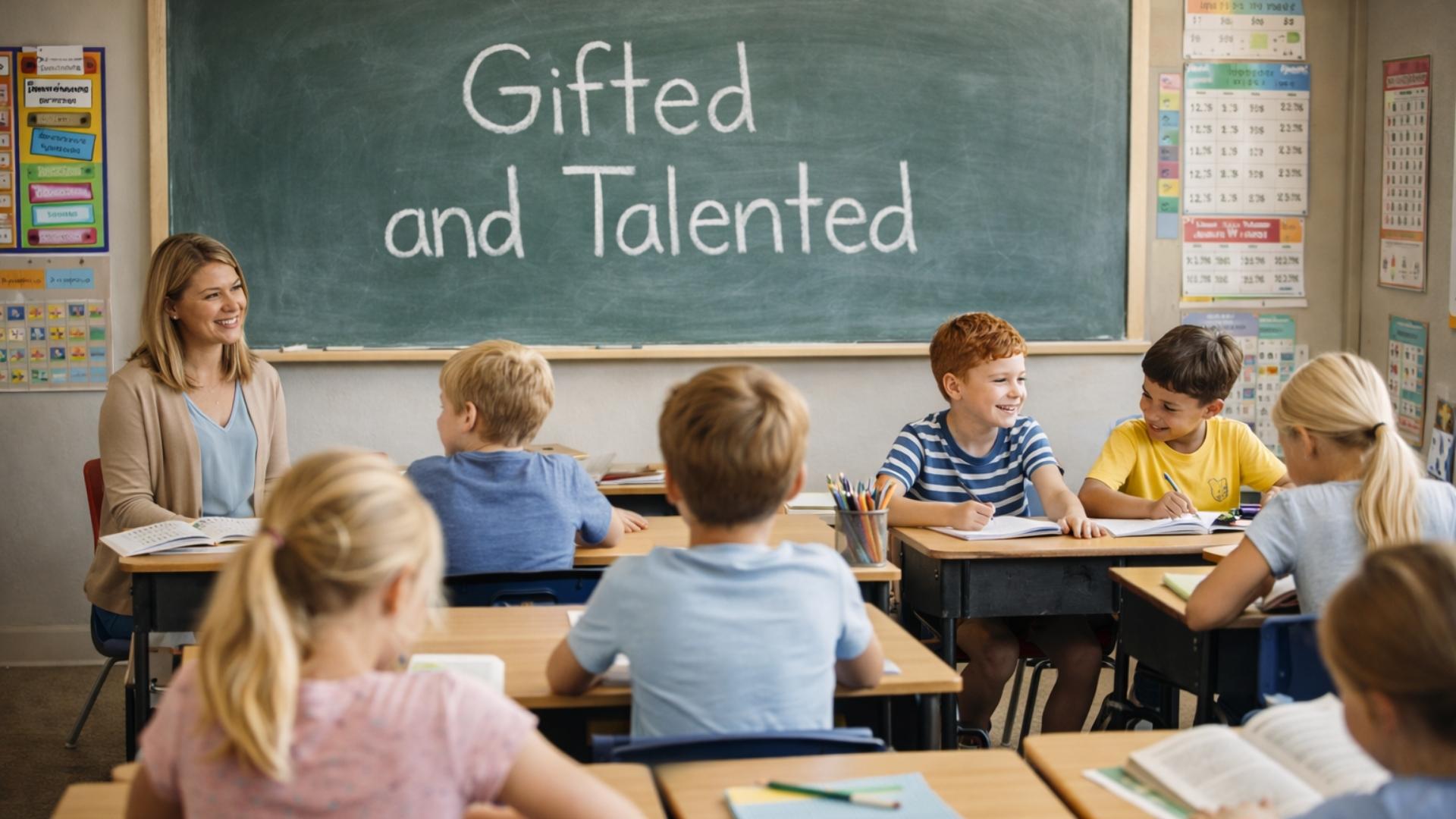
The same racial bias that pushes Black children toward special education also keeps them out of gifted, honors, and AP programs. The data here is equally stark. According to the Education Trust, Black students represent 16 percent of overall enrollment in elementary schools but only 9 percent of enrollment in gifted and talented programs. At the high school level, Black students make up 15 percent of high schoolers nationwide but only 9 percent of students enrolled in at least one AP course.
This gap does not begin in high school. It starts in elementary school, which means Black children are being sorted out of advanced pathways before they even reach middle school. The underrepresentation in AP classes is a result of bigger systemic issues. Who gets to take an advanced course in high school largely depends on who got to take advanced classes in middle school or was placed into a gifted program in elementary school. Each stage of exclusion sets up the next one.
The lack of access to diverse educators is consequential for all students, but particularly for Black students, since Black teachers play a large role in identifying Black students as gifted. This finding connects directly to the special education research: the same race-of-teacher effect that protects Black children from improper special education placements also increases the likelihood that those children will be recognized as gifted.
What Happens to a Child Who Is Misplaced
Let’s be honest about something first: special education services, when properly applied to children who genuinely need them, can be transformative and life-changing. The problem is not special education itself. The problem is racial misidentification and misplacement.
When a child who does not have a disability is placed in special education, the harms are well-documented. Students placed in special education were at greater risk of dropping out of high school, earning less, experiencing unemployment, and enrolling in postsecondary education for fewer years. Beyond economics, the label of special education may harm children psychologically and also lead to stigmatization, bullying, and low teacher expectations.
Researchers have also described what one scholar called a “triple jeopardy” effect: disproportionality places Black and Latino students first in their increased likelihood of being misclassified as disabled, then in their greater likelihood of being placed in the most restrictive settings with little or no interaction with general education students, and then in their greater likelihood of receiving poor-quality instruction. Each layer compounds the last.
Similarly, blocking a child from gifted or AP coursework closes doors that are difficult to reopen. Students in advanced courses are better prepared for college, more engaged in school, and develop higher expectations for themselves. When those opportunities are denied based on race, the impact follows the child for the rest of their life.
Trump Is Making All of This Worse
If the systemic racial sorting of Black children in public schools was already a crisis before 2025, the Trump administration has now turned that crisis into a catastrophe. The administration has methodically dismantled the very federal infrastructure that Black parents and communities relied on to hold schools accountable.
The most immediate damage has been done to the Office for Civil Rights (OCR), historically one of the primary avenues through which families could fight discriminatory school placements without hiring an attorney. The Trump administration laid off nearly half of the OCR’s staff, shuttering seven of its twelve regional civil rights enforcement offices, including those in Chicago, Philadelphia, New York City, Dallas, San Francisco, Boston, and Cleveland. The practical consequence for Black families is staggering. The OCR dismissed roughly 90 percent of the more than 9,000 new complaints of discrimination based on race, sex, disability, and age it received from March to September 2025. Typically around 70 percent of cases are dismissed for lack of merit. The gap between 70 percent and 90 percent represents thousands of Black children and children with disabilities whose legitimate civil rights complaints were simply thrown away.
Trump issued an executive order directing all federal agencies, including the Education Department, to stop enforcing cases involving policies that disproportionately affect certain groups, including situations where Black students are disciplined more harshly than white students for the same infractions. This is a direct attack on the legal doctrine of “disparate impact,” which for decades has been the primary tool civil rights attorneys used to challenge school policies that appear neutral on their face but produce racially discriminatory outcomes. Without disparate impact enforcement, schools can continue channeling Black children into special education and away from gifted programs without any federal accountability whatsoever, so long as they do not explicitly say race is the reason.
The administration also weaponized civil rights law against the Black community itself. The Trump administration used a landmark law intended to end racial discrimination to investigate Chicago Public Schools over a “Black Students Success Plan,” after a complaint that the program discriminated against students of other races. The message to school districts across the country is unmistakable: programs specifically designed to close the racial gap in gifted enrollment and reduce the racial disparity in special education referrals are now legally vulnerable to federal investigation.
Beyond enforcement, the administration moved to eliminate the data collection systems parents and advocates depend on to even prove discrimination exists. The rollback of the Civil Rights Data Collection, which has been crucial since 1968 in tracking inequalities in public schools nationwide, included dropping key metrics such as the number of students taking advanced placement exams disaggregated by race and disability. You cannot fight what you cannot measure, and the administration understands that perfectly well.
A longtime lawyer in the OCR told CNN the office is now “a black hole,” with no staffing, no coherent direction, and “not a mission to actually effectuate civil rights laws,” adding that at this point she would not turn to the office “if I had an issue with my student or with my kids.” That assessment did not come from an outside critic. It came from someone inside the agency charged with protecting your child.
The sum total of these actions means that if your Black child is being improperly tracked into special education today, or is being denied access to gifted and AP courses because of race, the federal enforcement mechanism that once existed to correct that is effectively gone. This is not an accident. It is a policy choice, and Black parents must respond to it as such.
What Black Parents Must Do Right Now
Your first tool is awareness. If your child has been placed in special education, do not simply accept it. Ask for documentation. Request to see the full evaluation, the specific disability classification, and the data used to support that classification. Under federal law, specifically the Individuals with Disabilities Education Act (IDEA), you have the right to review all records related to your child’s identification and placement.
If something does not feel right, you have the right to seek an Independent Educational Evaluation. Critically, in many circumstances the school district may be required to pay for that independent evaluation if you disagree with the district’s assessment. Use that right without apology.
If the independent evaluation does not support the special education placement, begin the formal process of removing your child from those services. But be cautious and intentional: if the evaluation confirms your child does have a genuine need, embrace the services with the understanding that proper special education can truly help.
On the gifted and AP side, advocate loudly and persistently. Ask the school what criteria are used for advanced course placement. Request your child’s academic records and have a frank conversation with their teacher and guidance counselor. If your child meets or exceeds grade-level standards and is not being recommended for advanced coursework, challenge that decision in writing. Ask what the appeals process is and use it. Many students are not even aware that an appeals process exists, not to mention when it takes place and in what form, so demand that information up front.
Because the federal OCR is now largely unavailable to Black families, you must also explore state and local remedies. Title VI of the Civil Rights Act of 1964 and the IDEA remain on the books as federal law. State human rights commissions, state departments of education, and civil rights attorneys in your area may be your most realistic path to relief right now. Document everything, put your concerns in writing, and keep copies of all communications with your child’s school.
A Community Has Already Fought and Won
This is not a battle without precedent. In New Jersey, the Black Parents Workshop took the South Orange-Maplewood school district all the way to federal court. In 2014, the Office for Civil Rights found that the district did not provide African American students equal access to Honors and AP programs. By 2020, the OCR found that the district was improperly grouping students in tiered classes based on test scores or perceived abilities and systematically discriminating against Black students, creating a systemic racial achievement gap. The Black Parents Workshop ultimately reached a settlement with the school district, with the agreement unanimously approved by the Board of Education.
That community organized, documented the harm, and held their school district accountable. Every Black community in this country has the same right and, I would argue, the same obligation to do the same.
The NBPA Is Standing With You
This practice is happening in school districts across America right now. It is not an accident. It is not explained by the intellectual capacity of our children. It is a racial sorting system embedded in the bureaucracy of public education, and the Trump administration has stripped away the federal tools that once gave Black parents a fighting chance to challenge it.
The National Black Parents Association exists precisely for moments like this. We are here to equip you with the knowledge, the legal framework, and the community support to fight back. Know your child’s rights. Know your rights as a parent. And know that when we organize together, school districts listen.
Your child is not a problem to be managed. Your child is a gift waiting to be recognized.