
Education Equity
Resource
The Fight Continues
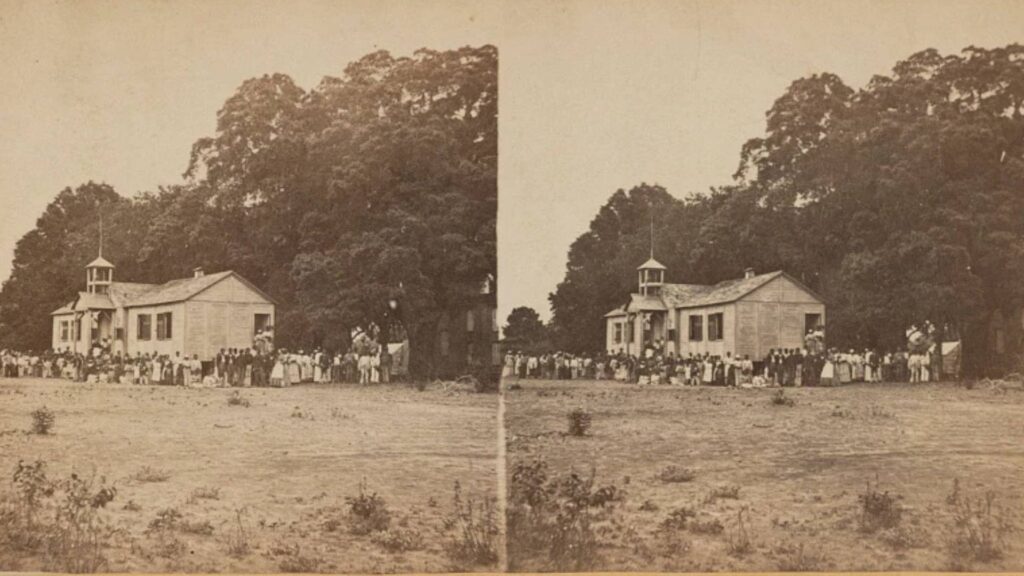
During slavery, many states prohibited teaching enslaved Africans to read and write. Education threatened the system of slavery. After the ratification of the Thirteenth Amendment to the United States Constitution, millions of newly freed African Americans pursued education as a path to freedom and self-determination.
Congress responded by creating the Freedmen’s Bureau, which built schools across the South and supported the education of formerly enslaved people. The Fourteenth Amendment to the United States Constitution established that states must provide equal protection under the law. In theory, that included equal access to education. In practice, states resisted.
From Segregation to Legal Equality
In 1896, the Supreme Court’s decision in Plessy v. Ferguson upheld “separate but equal,” allowing states to maintain segregated and unequal schools for decades.
That changed in 1954 with Brown v. Board of Education. The Court ruled that separate educational facilities are inherently unequal, placing education equality at the center of constitutional law
Federal Enforcement and Civil Rights Protections
Pursuant to President Lyndon B. Johnson, Congress followed with laws designed to enforce these rights:
- Title VI of the Civil Rights Act of 1964 prohibits racial discrimination in any school receiving federal funding.
- The Elementary and Secondary Education Act of 1965 (ESEA) directed federal funding to low-income schools, many of which serve African American communities.
These laws transformed education from a local issue into a civil rights obligation backed by federal enforcement.
The Role of the Department of Education
The modern U.S. Department of Education was created in 1980 under Jimmy Carter through the Department of Education Organization Act of 1979.
It was not created to control local schools. Its core functions include:
- Enforcing civil rights laws like Title VI
- Distributing federal education funding
- Collecting national education data
- Protecting equal access to education
This federal role exists because states historically failed to protect Black students.
Opposition to the Department of Education
From its creation, the Department faced strong opposition from conservative political groups.
- During the 1980 presidential campaign, Ronald Reagan called for the Department of Education to be eliminated
- The Republican Party platform in 1980 explicitly supported abolishing it
- Conservative arguments focused on “states’ rights” and limiting federal power
This opposition did not emerge in a vacuum.
Federal education enforcement had become a key tool for:
- Desegregation
- Civil rights compliance
- Equal funding pressure
Efforts to weaken or eliminate the Department would remove one of the primary mechanisms used to protect African American students from discrimination.
President Trump is in the process of dismantling the Department pursuant to Project 2025.
The Reality Today
Despite legal progress, education equity remains unfinished.
Federal data shows:
- Black students face higher rates of suspension and school-based arrests
- They are underrepresented in advanced courses like AP math and science
- Significant achievement gaps persist in reading and math
According to the National Assessment of Educational Progress (NAEP), Black students continue to score lower on average than white students in core subjects, reflecting ongoing disparities in access and opportunity.
Why This Work Matters
Education equity means more than access. It means fair treatment, equal resources, and real opportunity.
For African American children, that includes:
- Safe and supportive school environments
- Access to high-quality teachers and coursework
- Fair discipline practices
- Proper identification in special education
- Equal funding and resources
These are not mere preferences. They are civil rights grounded in the Constitution and federal law.
Our Commitment
The National Black Parents Association exists to ensure these rights are protected and enforced.
We focus on:
- Closing achievement gaps
- Challenging discriminatory practices
- Advocating for equitable funding
- Holding institutions accountable
The law is clear. Our history is also clear.
Education equity is not optional. It is a constitutional and civil rights obligation.